CCL 2015: Full Conference Report

An idea whose time has come

In 2010, when Citizens’ Climate Lobby brought 25 citizen volunteers to Capitol Hill, it felt like a big challenge to get enough people to go the distance, to meet with all 535 voting members of Congress. This year, we brought 36 times as many people, and it is looking more like we will need more elected officials to welcome and build relationships with all the citizen lobbyists coming to make democracy work.

Continue Reading

We are All Now Safer in our Freedom

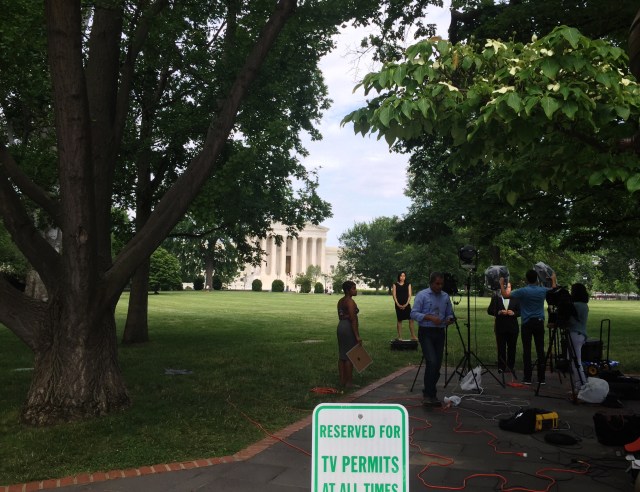
On the morning of June 26, 2015, the Supreme Court ruled that same-sex marriage is a basic right, across the United States. The ruling in the case known by the name Obergefell v. Hodges was 5 to 4, showing a tightly split Court, but effectively invalidating all bans on same-sex marriage, whether brought into effect by legislation, referendum, executive order or lower court rulings. 

Here’s why this is good for people of all political and religious persuasions: 

Continue Reading

How Citizens can Catalyze Climate Action

On June 5—World Environment Day—we held a press conference to announce CCL’s effort, through the Pathway to Paris project, in collaboration with the World We Want, to build a worldwide always-active Citizens’ Climate Engagement Network. The press conference was conducted in association with the Climate Matters video interview series, as well as COY11, CliMates, IAAI GloCha, Context News, and the Association Actions Vitales pour le Developpement Durable.

Continue Reading

Every Person Everywhere Counts

Joseph Robertson's avatarGeoversiv Earth Intelligence

A week at the World Bank and IMF

The 2015 Spring Meetings and Civil Society Policy Forum brought people from many different sectors together to discuss how fiscal and development policy and governance can be made to serve real human need future-focused thinking and enforceable transparency. The news of the week, the running theme, and the most under-reported story in mainstream financial reporting, is that the work these institutions are looking forward to is about actual service to all people everywhere, especially the most vulnerable.

The World Bank’s mission is to end poverty and foster shared prosperity; the IMF focuses on fiscal solvency, and works to ensure nation-states don’t collapse from runaway inflation or crippling debt burdens. For decades, critics have argued that though well-intentioned, many of their projects have had the opposite effect, leaving harm where it didn’t need to be or propping up illegitimate regimes. As the voice…

View original post 2,940 more words

Quiet Revolt Stuns UK Pollsters

For weeks, public opinion polls in the UK have shown the contest for leadership of the UK government to be a dead heat, likely to require a complicated negotiation to achieve a new governing coalition. Nearly every poll showed the Conservatives and Labour to be hovering around 34 percent support each. No one was expected to win an outright majority. Late last night, however, exit polls showed something radically different: David Cameron’s Conservatives beat Labour 37 to 31 in the popular vote, and would hold an outright majority in Parliament, while the Scottish National Party won nearly every seat in Scotland.

Continue Reading

The Vastness of the Open Water

Joseph Robertson's avatarGeoversiv Earth Intelligence

A note on entering the new age of exploration*

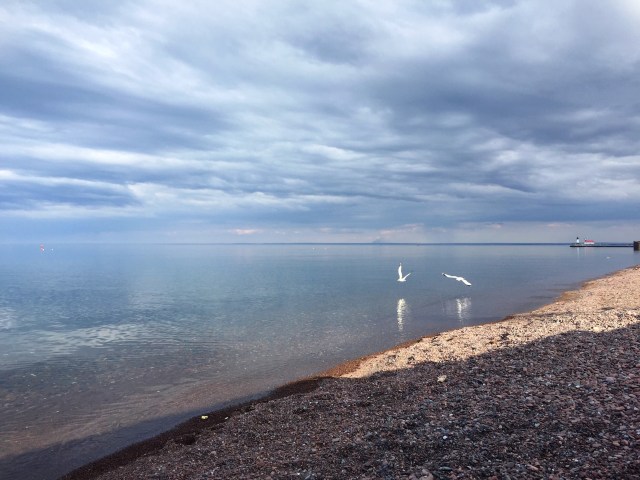
Lake Superior is the largest body of fresh water in the world, by surface area, unless you count Lakes Huron and Michigan as one lake, because they are connected by an open flow of water 5 miles across. Where we draw boundaries determines how we rank the objects of our experience and exploration. On my first visit to Lake Superior, I had the privilege of being with two friends, who have redefined boundaries in ways that bring benefit to the wider world. Paul Thompson is a brilliant convener of friends and citizens, who brings people together, with a unique confidence in their ability to find each other’s virtues and build on them, together. David Thoreson is a sailor and Arctic explorer, whose voyages have taken him through the Northwest Passage, in both directions, and around the Americas, fully 28,000 miles in…

View original post 665 more words

Savoring Collaborative Intelligence

Joseph Robertson's avatarGeoversiv Earth Intelligence

pathway2paris-logo-text-v3aCitizens’ Climate Lobby report from the Pathway to Paris working session at the World Bank Civil Society Forum

Our Pathway to Paris World Bank Working Session, held at the Civil Society Policy Forum on Wednesday, April 15, focused on the role of direct citizen participation in the global climate negotiations. For many reasons, direct citizen participation has been limited:

  1. One is there are already tens of thousands of people participating, representing interests, issues, places, solutions, grievances, and legal constructs.
  2. Another is that intergovernmental negotiations generally treat the interests of citizens and stakeholders as the province of their government officials. The sovereignty and political process of nations stand in for direct engagement.
  3. A third is that citizen participation is often equated to referenda, which are not always the best expression of the will of the people or the safest route to the policy that most benefits those voting.
  4. But a…

View original post 2,151 more words

Disruptive Optimism for Serious Change

We need non-expert voices in the room. No individual expert knows everything, many decision-makers are themselves non-experts, and considering stakeholders’ voices leads to more legitimate, relevant and viable policy outcomes. Significant improvements in the prevailing condition require disruption of the status quo. The status quo implicitly extends from the status quo ante, the prevailing norms that preceded the current state of affairs and on which the structures we know were founded. Expertise is rooted in an examination of these two states, and can provide a sound and reasoned reference for how to move into the future, but when we look to achieve a post status quo reality, where human conditions are greatly improved and the previously unavailable has become commonplace, we have to recognize that we are looking beyond what is known. Expertise unaccompanied by the power of imagination and a hot contest of ideas can lead to planning not well adapted to visualizing, comprehending or catalyzing disruptive optimizing change.

Continue Reading

GOOD-based Economics: How to Build the Middle Class

Our political system is not, strictly, a macroeconomic guidance machine; political leaders have a lot of responsibilities that take day-to-day precedence over direct macroeconomic maneuvering. Stewardship of our civic infrastructure can provide direct benefits to citizens, communities, and enterprise, and so our analysis of how well our policy choices work to motivate real macroeconomic health and improvement needs to consider those other values.

We all know, from one perspective or another, how ideological preferences influence what one analyst or another might refer to as “just the numbers”; this is one of the main reasons there is such heated disagreement about whose policy preferences do better at creating value for households, communities, and enterprise. By adding to our value considerations a G.O.O.D. economic analysis, we can better see the generative capacity of a given policy priority, economic trend, or technical innovation.

Continue Reading

Common Sense Demands Collaboration

The word politics comes from polis, the Greek word for city, or state. Politics is the art of living amongst people. It is, at the root, and in practice, a project of collaborative problem-solving. In its broadest sense, it is a way to describe our process of learning how to talk about value with those around us; it is the study of what happens when people make choices, relying on free will and individual expression. Cynics, with either too much or too little immediate access to power, often argue there can be no real freedom and little cause for faith in humanity. That has never been the case. We constantly exercise our power of observation, our judgment, and our freedom to choose; this is how we relate to every person we know. In this sense, politics is what Jacques Derrida referred to as peri-philías: an examination of the nature of friendship. We form affinities, friendships, families, communities, alliances; we apply our vision, our judgment, our imaginations, and our best use of shared language, to hold the world together. It is to our benefit that choices lead to consequence, so we can choose better, improve outcomes, redress our failings. The question is: Do we build on each other’s strengths?

Continue Reading

No more posts.